How Iron Content in Nepheline Affects Ceramic Whiteness and Glass Quality
Oct,27,2026
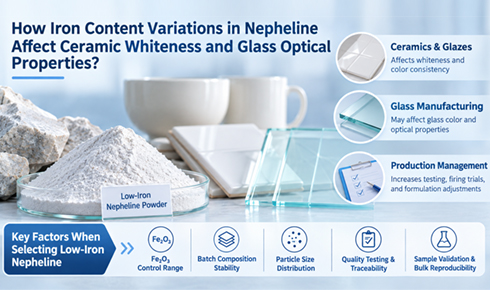
In ceramic, glaze, and glass manufacturing, iron may be present in relatively small amounts in raw materials, yet it can influence the color, whiteness, and optical properties of finished products. For high-whiteness ceramics, light-colored glazes, and glass products sensitive to iron impurities, controlling the Fe₂O₃ content in nepheline is important. Maintaining consistency from batch to batch is equally essential. The key is not simply how low the iron content is, but how consistently it can be controlled across different batches. 1. Why Is Iron Content in Nepheline Important? Nepheline is an alkali aluminosilicate mineral used in ceramic bodies, glazes, and selected glass formulations. Its chemical composition and fluxing properties make it a useful raw material for various industrial applications. However, the Fe₂O₃ content of a raw material can influence the color of the final product. In ceramic and glaze production, iron impurities may cause unwanted color variations in white or light-colored products, affecting fired whiteness and visual consistency. In glass manufacturing, iron content and its chemical state may also influence glass color and optical properties. The actual effects depend on the glass composition and processing conditions. For applications with strict requirements for whiteness, color consistency, or optical performance, selecting nepheline...
Learn More