
Quartz powder is widely used in coatings, engineered stone, ceramics, and other industrial products. During procurement and quality inspection, in addition to particle size, silica content, and impurity levels, whiteness is also a frequently scrutinized indicator. Especially in white, light-colored, or products with high requirements for color consistency, the color performance of quartz powder is a factor that cannot be ignored in raw material selection.
So why does quartz powder require attention to whiteness? Does higher whiteness necessarily mean better product quality? To answer these questions, whiteness needs to be understood within specific application scenarios and quality evaluation systems.
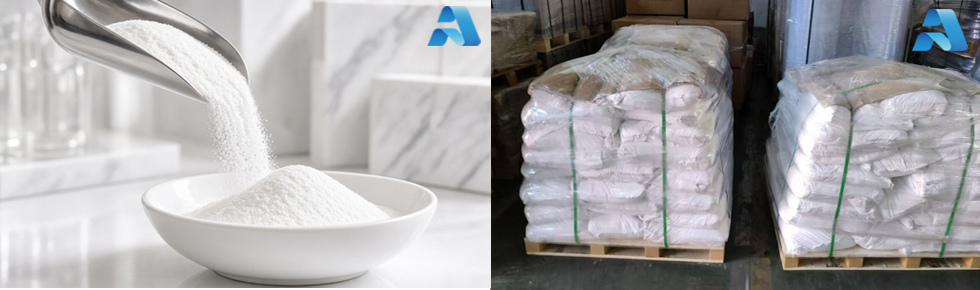
When quartz powder is added as a filler into a formula, it is not a completely “neutral material” that has no effect on color. The inherent color of the raw material participates in forming the base tone of the product. This influence is particularly noteworthy in white and light-colored systems.
Taking engineered stone as an example, quartz powder is a component of the formula, and its whiteness and color performance will affect the visual effect of the slabs. If the raw material shows obvious gray, yellow, or other mixed colors, even if the formula remains unchanged, it may increase the difficulty of controlling the color of the finished product. Therefore, for products with high appearance requirements, selecting quartz powder with appropriate color is a fundamental part of raw material quality control.
This also means that the value of whiteness is not merely about making the powder “look whiter,” but about helping the raw material better meet the appearance requirements of the end product.
For enterprises engaged in continuous production, the fact that one batch of quartz powder meets the requirements does not mean that subsequent batches will achieve the same usage effect. Raw material selection also needs to focus on whether the supplier can consistently control the source of the raw material, the purification process, and the powder processing quality. The performance of quartz powder is closely related to these links, and supplier evaluation should also be carried out in combination with parameters such as whiteness, iron content, and particle size distribution.
In appearance-sensitive applications, procurement evaluation should not stop at “whether the sample is white enough,” but should also pay attention to whether the color performance of different batches is stable. In other words, rather than simply pursuing a higher numerical value from a single test, establishing clear and sustainably enforceable acceptance requirements is more conducive to quality management in actual production.
Whiteness can provide a reference for raw material screening, but it cannot be directly equated with chemical purity.
In the production process of quartz powder, iron-containing impurities and iron contamination introduced during processing are issues that need to be controlled. Related production processes improve product quality through raw material treatment, impurity removal, and processing control. Therefore, when evaluating quartz powder, it is meaningful to consider color performance in conjunction with impurity control.
However, “whiter color” does not prove that all impurities are lower, nor can it replace chemical composition testing. For applications with clear purity requirements, purchasers still need to check the test results of silica, iron oxide, and other related impurities, and cannot make judgments solely based on appearance or a single whiteness value.
Whiteness answers the question of the raw material’s color performance, while chemical testing answers the question of whether the composition meets the requirements. The two should complement each other.
Not necessarily. Whether quartz powder is suitable depends on whether it can meet the specific requirements of the product, rather than whether a certain indicator reaches the highest value.
For white, light-colored, or products with high decorative requirements, whiteness usually has a higher priority in selection; however, in other applications, purchasers also need to simultaneously consider particle size distribution, impurity levels, and the matching degree between the raw material and the processing system. Comparing whiteness in isolation from the intended use can easily overlook factors that truly affect the application effect.
For example, two types of quartz powder may have similar whiteness but different particle size distributions and iron contents, so they cannot be considered directly interchangeable. Supplier evaluation should be based on multiple parameters and actual application requirements, rather than focusing solely on “whiter.”
To make raw material selection more aligned with production needs, purchasers can incorporate the following information into the evaluation:
– Whiteness and color performance: Whether it meets the appearance requirements of the finished product.
– Silica content: Whether it meets the project’s requirements for the main component.
– Iron oxide and related impurity content: Whether it reaches the control requirements of the target application.
– Particle size and particle size distribution: Whether it meets the formula and processing needs.
– Supplier’s quality control capability: Whether raw material treatment, purification, and particle size control are stable.
These indicators need to be judged in combination. For example, meeting the whiteness requirement does not mean the particle size is necessarily suitable; meeting the particle size specification does not mean the impurity level satisfies the usage conditions. Matching the test data with the actual formula requirements is necessary to more accurately judge the applicability of the raw material.
The reason why the whiteness of quartz powder is important is that it is directly related to the color performance and appearance control of the product. However, whiteness is only part of the raw material quality evaluation, not the sole standard for measuring quality.
For purchasing and production enterprises, a more reasonable selection approach is to first clarify the needs of the end product, and then comprehensively evaluate whiteness, purity, iron content, and particle size distribution. Selecting quartz powder that is suitable for the application, has clear parameters, and offers stable supply is more practically meaningful than simply pursuing a higher whiteness value.
📞Tel:+86 158 3720 7537 (WhatsApp)
📧Email: info@lsakminerals.com
🌐Web: www.lsakminerals.com

Whether you have questions or you would just like to say hello,Contact us!
Call Anytime:
+86 15837207537Send E-mail:
info@lsakminerals.comAddress:
Anyang City , Henan Province, China.