Beyond Chemistry: How Particle Size Geometry Drives Performance in Feldspar Applications
Feb,10,2026
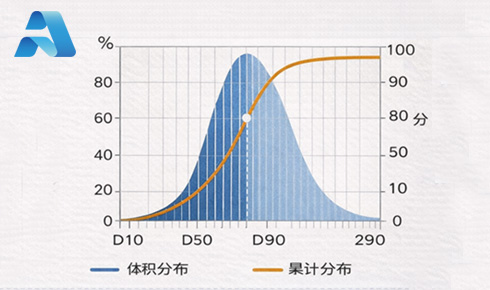
At LSAK Feldspar New Materials, we’ve long emphasized the importance of chemical purity—especially controlling trace elements like iron that can compromise whiteness and clarity in ceramics and glass. But there’s another silent variable that often goes unnoticed until it’s too late: particle size distribution (PSD). While two feldspar batches may share identical chemical compositions—say, 10.5% Na₂O—their real-world behavior in your kiln or melter can differ dramatically. Why? Because chemistry sets the stage, but particle geometry steals the show. The Myth of “Same Chemistry = Same Performance” It’s a common assumption in procurement: “If the spec sheet matches, the material will perform the same.” Unfortunately, this belief has led many producers to unexpected defects—pinholes in glazes, inconsistent vitrification, or even increased energy consumption during firing. The culprit? Uncontrolled particle size. Too coarse (>75 µm): Particles resist melting, leaving unmelted “pebbles” in glaze layers or requiring higher firing temperatures—driving up fuel costs and risking product rejection. Too fine (<20 µm): Excessive fines generate dust, impair powder flow, and promote agglomeration during batching, leading to non-uniform mixes and unpredictable sintering behavior. As reaction kinetics are governed by available surface area, not just bulk composition, particle size directly influences dissolution rate, melt homogeneity, and...
Learn More