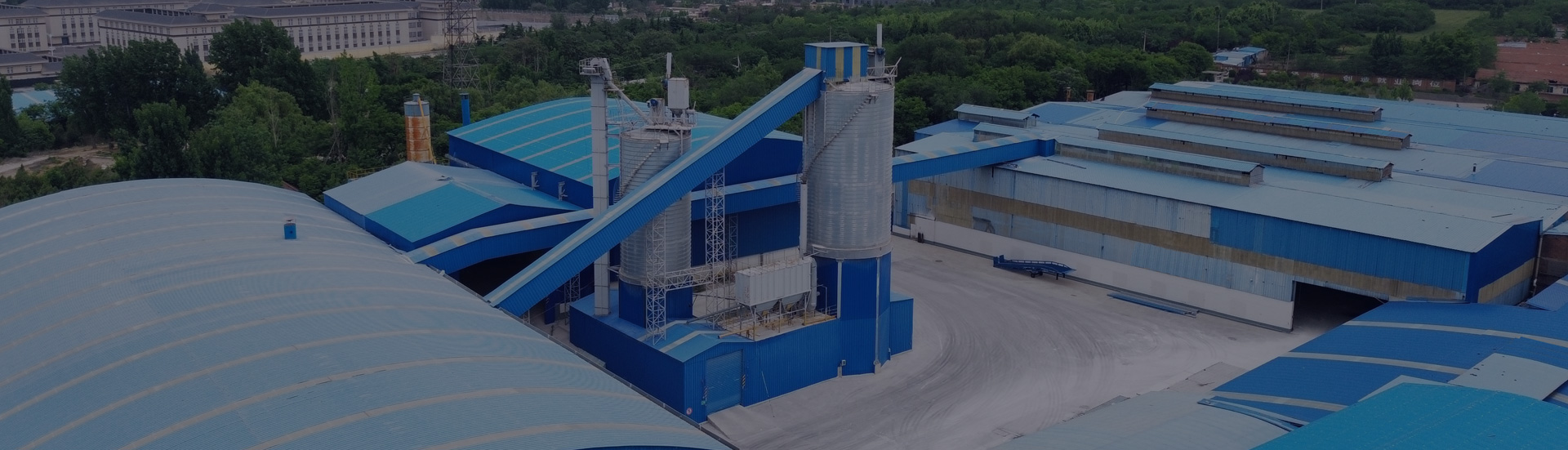
In the world of ceramic raw materials, albite (sodium feldspar) has long been a “low-key but critical” player.
As a primary flux, it lowers firing temperatures, promotes vitrification, and enhances the density and translucency of the ceramic body.
However, one detail is often overlooked — whiteness.
Today, let’s discuss whether the whiteness of albite truly affects the purchasing decisions of ceramic customers. The answer is a clear yes — and its impact is especially significant for mid-to-high-end customers.
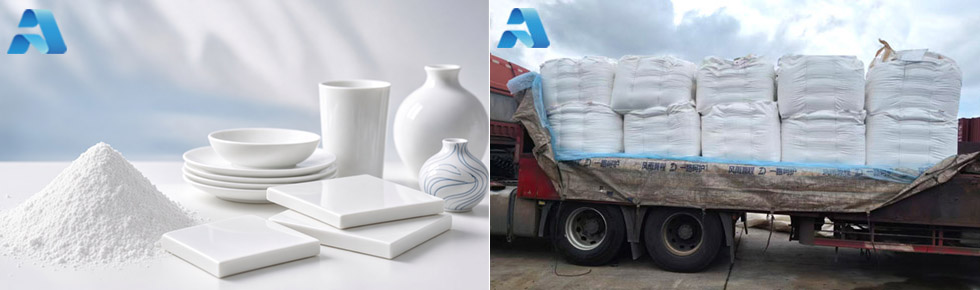
What ceramic manufacturers care about most is never how white the raw material looks in powder form, but rather the final appearance after firing.
Coloring impurities in albite — mainly Fe₂O₃ and TiO₂ — are the key factors influencing fired whiteness.
Even slightly elevated levels can cause the body or glaze to turn yellowish, grayish, or dull, and may even produce black spots.
For products that demand high whiteness and a pure base color — such as fine tableware, sanitary ware, and ultra-white porcelain tiles — this is almost always a disadvantage.
When evaluating albite quality in the industry, attention typically focuses on:
✅Fired whiteness (rather than simple powder whiteness)
✅Fe₂O₃ and TiO₂ content
✅Na₂O content and compositional stability
High-quality albite usually features very low iron and titanium levels, delivering excellent fired whiteness that supports the aesthetic requirements of premium products.
1. High-whiteness tableware, art porcelain, and sanitary ceramics
These customers are the most sensitive to whiteness. Low-whiteness albite directly reduces the final product’s brightness and translucency, affecting market acceptance and pricing power.
2. Architectural ceramics (especially ultra-white body tiles)
While the requirements are slightly less stringent than for tableware, albite with stable low iron-titanium content and good fired whiteness remains preferred. It helps minimize color variation risks and improves product consistency.
3. Glaze applications
Low-iron, high-whiteness albite contributes to higher gloss and cleaner glaze surfaces, making it particularly suitable for high-gloss or transparent glaze systems.
It’s worth noting that high-sodium flux materials sometimes show relatively modest “powder whiteness” readings (due to higher light transmission and lower reflectance). Therefore, decisions should not rely solely on surface data — chemical composition and actual firing performance must be evaluated together.
When sourcing albite, focus on the following:
1. Prioritize fired whiteness and iron-titanium content over simple visual whiteness
2. Request stable chemical composition reports from suppliers
3. Align with your product positioning: for high-whiteness products, choose low-iron, high-whiteness grades decisively; for standard products, balance cost and performance
4. Pay close attention to batch-to-batch consistency to avoid production color variations caused by raw material fluctuations
5. Whiteness is not the only indicator, but together with fluxing performance and compositional stability, it determines the application value and grade of albite.
In today’s ceramic industry, where quality and differentiation are increasingly prioritized, every detail on the raw material side is amplified.
The whiteness of albite may seem like a minor issue, yet it genuinely influences product quality and market competitiveness for customers.
What indicator do you value most when selecting albite in practice? Feel free to share your thoughts in the comments.
📞Tel:+86 158 3720 7537 (WhatsApp)
📧Email: info@lsakminerals.com
🌐Web: www.lsakminerals.com

Whether you have questions or you would just like to say hello,Contact us!
Call Anytime:
+86 15837207537Send E-mail:
info@lsakminerals.comAddress:
Anyang City , Henan Province, China.