In the field of advanced materials, a seemingly ordinary measurement unit—ppm (parts per million)—holds staggering “value.” Like a microscopic notch on a precision scale, it accurately measures the presence of trace impurities, directly determining a product’s performance ceiling and market value. For quartz products, the critical importance of the ppm unit cannot be overstated.
The primary component of quartz is silicon dioxide (SiO2), which is widely used in semiconductors, solar photovoltaics, fiber optic communications, optical glass, and other high-tech sectors. While standard quartz may hover around 99% purity, high-end applications demand near-absolute perfection. Even trace amounts of residual metal ions—such as aluminum, iron, titanium, sodium, or potassium—can severely degrade the material’s thermal stability, electrical insulation, optical transmittance, and the crystalline purity required for semiconductor growth. These impurities cause structural defects, lower photoelectric conversion efficiency, and can even trigger catastrophic drops in chip yield rates.
The ppm unit serves as the essential tool for quantifying these “invisible killers.” For instance, high-purity quartz sand typically requires total impurity levels to be controlled below 50 ppm, and often under 20 ppm or 10 ppm to satisfy high-end manufacturing standards. Elevating purity from 99.9% to 99.99% or higher may seem like a mere 0.09% marginal gain, but the underlying ppm-level impurity control multiplies the product’s market value by factors of ten or more.
Industry experts point out that ppm-level purity control is the ultimate threshold separating “commodity raw materials” from “strategic materials” in the quartz industry. In the photovoltaic sector, low-impurity quartz crucibles significantly enhance the quality of monocrystalline silicon ingot pulling; in the semiconductor industry, sub-ppm level control serves as the absolute foundation for ensuring chip reliability in advanced process nodes. Clearly, ppm is far from just a simple metric—it is the gold standard for measuring the technical sophistication and true value of quartz products.

LSAK Feldspar, a leading domestic manufacturer of quartz materials, recently announced that the silicon dioxide content of its flagship high-purity quartz products consistently reaches over 99.9% (3N grade). Furthermore, various impurity levels are strictly regulated within a remarkably low ppm range, with key performance indicators significantly outperforming the industry average—underscoring the product’s elite market positioning.
Utilizing multiple advanced processes, including physical mineral processing, chemical purification, and high-temperature refining, the company has effectively eliminated inclusions and lattice impurities from the raw ore. Major impurities such as Fe2O3 and Al2O3 have been suppressed to an ultra-low ppm spectrum, ensuring exceptional cleanliness and consistency. This premium profile fully satisfies the stringent requirements for high-end photovoltaic crucibles, high-precision optical devices, and mid-to-high-end electronic materials.
Compared to top-tier international counterparts, LSAK Feldspar’s offerings present a highly compelling balance of purity and cost-effectiveness. Currently, global high-purity quartz resources face structural scarcity; ultra-high-purity products above 4N grade with impurities below 20–30 ppm rely heavily on imports. By delivering a stable 99.9% silicon content paired with meticulous ppm-level impurity control, LSAK Feldspar not only fills a critical gap in the domestic mid-to-high-end market but also provides a highly dependable, localized supply chain alternative for downstream new energy, semiconductor, and optical industries.
Market analysts project that driven by the rapid expansion of the green energy and semiconductor sectors, demand for high-purity quartz sand will sustain robust growth over the coming years.
Industry insiders note that this achievement represents another significant stride forward for domestic companies in quartz purification technology. “Moving from percentage-based metrics to ppm-level micro-control appears subtle on paper, but it demands immense technical breakthrough behind the scenes.” The company spokesperson added that LSAK Feldspar will continue to deepen its expertise in ppm-level precision engineering, actively pushing toward 99.99% and higher purity thresholds to provide even more robust material support for advanced domestic manufacturing.
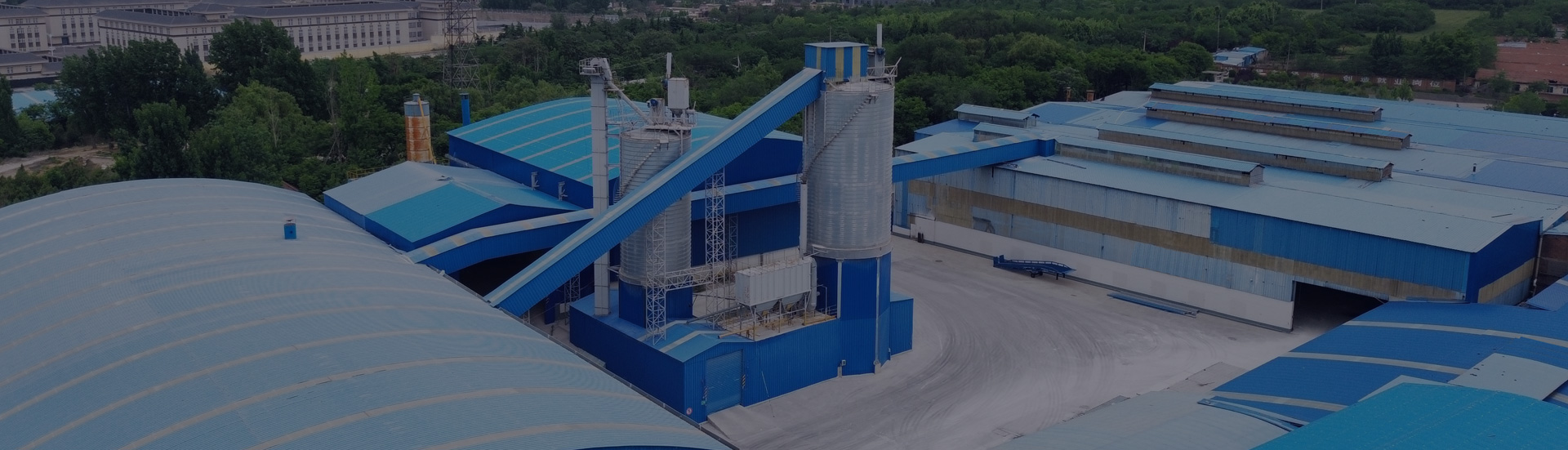
Against the backdrop of global carbon neutrality goals and the drive for technological self-reliance, the microscopic unit of ppm is acting as a massive amplifier for macro-industrial competitiveness. As a leading enterprise dedicated to upgrading quartz purity, LSAK Feldspar leverages its formidable factory production capabilities and state-of-the-art purification technology to forge its own core competitiveness while injecting powerful momentum into the entire supply chain. Looking ahead, as the company’s manufacturing facilities continue to iterate and upgrade their ppm-level precision control technologies, their high-purity quartz products are destined to unlock even greater commercial and strategic value.
📞Tel:+86 158 3720 7537 (WhatsApp)
📧Email: info@lsakminerals.com
🌐Web: www.lsakminerals.com

Whether you have questions or you would just like to say hello,Contact us!
Call Anytime:
+86 15837207537Send E-mail:
info@lsakminerals.comAddress:
Anyang City , Henan Province, China.