At LSAK Feldspar New Materials, we’ve long emphasized the importance of chemical purity—especially controlling trace elements like iron that can compromise whiteness and clarity in ceramics and glass. But there’s another silent variable that often goes unnoticed until it’s too late: particle size distribution (PSD).
While two feldspar batches may share identical chemical compositions—say, 10.5% Na₂O—their real-world behavior in your kiln or melter can differ dramatically. Why? Because chemistry sets the stage, but particle geometry steals the show.
The Myth of “Same Chemistry = Same Performance”

It’s a common assumption in procurement: “If the spec sheet matches, the material will perform the same.”
Unfortunately, this belief has led many producers to unexpected defects—pinholes in glazes, inconsistent vitrification, or even increased energy consumption during firing.
The culprit? Uncontrolled particle size.
Too coarse (>75 µm): Particles resist melting, leaving unmelted “pebbles” in glaze layers or requiring higher firing temperatures—driving up fuel costs and risking product rejection.
Too fine (<20 µm): Excessive fines generate dust, impair powder flow, and promote agglomeration during batching, leading to non-uniform mixes and unpredictable sintering behavior.
As reaction kinetics are governed by available surface area, not just bulk composition, particle size directly influences dissolution rate, melt homogeneity, and final product quality.
Precision Engineering at Every Micron
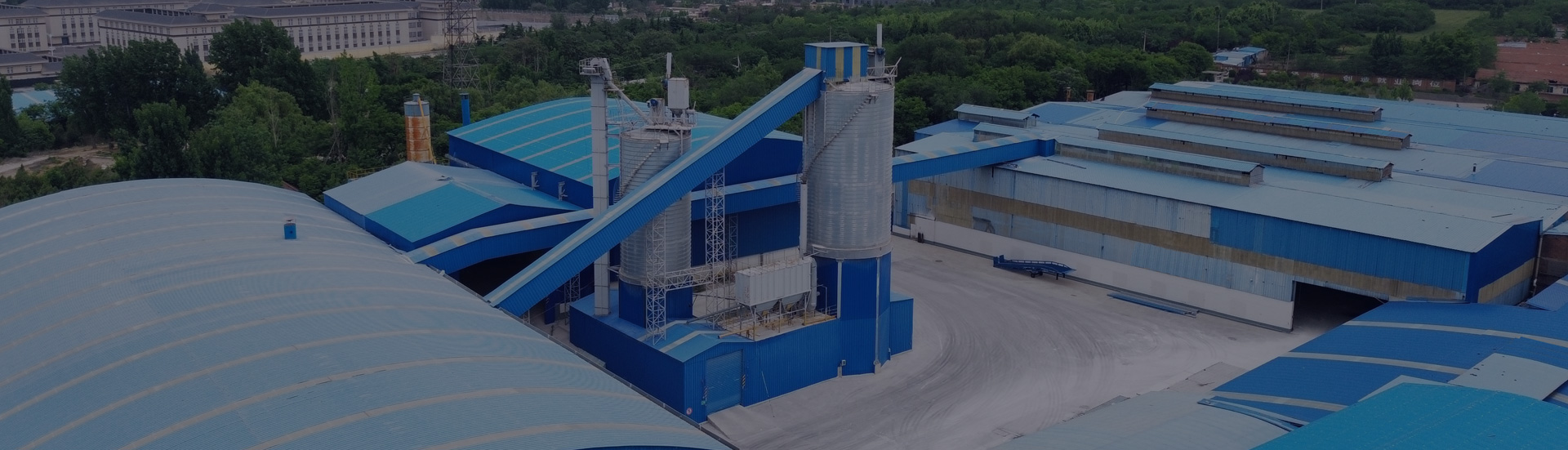
Recognizing this, LSAK has invested in advanced air classification technology at our Anyang production facility—a system designed not just to meet mesh standards, but to engineer reactivity.
Our state-of-the-art classification line enables precise control over particle size distribution, allowing us to tailor feldspar grades to specific industrial applications:
| Mesh Size | Avg. Particle Size | Ideal For |
|---|---|---|
| 325 mesh | ~45 µm | Fast-melting sanitary ware glazes |
| 200 mesh | ~75 µm | Standard ceramic bodies (tiles, tableware) |
| 600–1250 mesh | 10–20 µm | Specialty glass, technical ceramics, high-clarity applications |
Each batch undergoes rigorous laser diffraction analysis to ensure consistency—not just from lot to lot, but within the lot itself.
Delivering More Than Minerals—Delivering Predictability
“At LSAK, we don’t just sell feldspar,” says [moumou], Technical Director at LSAK Feldspar ( Ankai New Materials). “We sell controlled reactivity. By optimizing particle geometry alongside chemistry, we help our customers reduce energy use, minimize defects, and eliminate costly surprises after firing.”
In an industry where margins are tight and quality expectations are rising, predictability isn’t a luxury—it’s a necessity.
Partner with Precision
Whether you’re formulating a high-gloss tile glaze or developing next-generation display glass, the right particle size isn’t optional—it’s essential.
Ask us for a sample tailored to your process.
Because when performance matters, chemistry alone isn’t enough.
About LSAK Feldspar New Materials
LSAK is a leading producer of high-purity feldspar and specialty mineral products for the global ceramics, glass, and advanced materials industries. With vertically integrated mining and precision processing facilities in China, we combine geological expertise with cutting-edge particle engineering to deliver consistent, high-performance raw materials—batch after batch.
Contact:
Email: mailto:info@lsak-minerals.com
Website: http://www.lsak-minerals.com
WhatsApp: +86 158 3720 7537

Whether you have questions or you would just like to say hello,Contact us!
Call Anytime:
+86 15837207537Send E-mail:
info@lsakminerals.comAddress:
Anyang City , Henan Province, China.